Key Takeaways
- Repeat customers spend 67% more per transaction than new customers — and cost 5-7x less to retain than to acquire
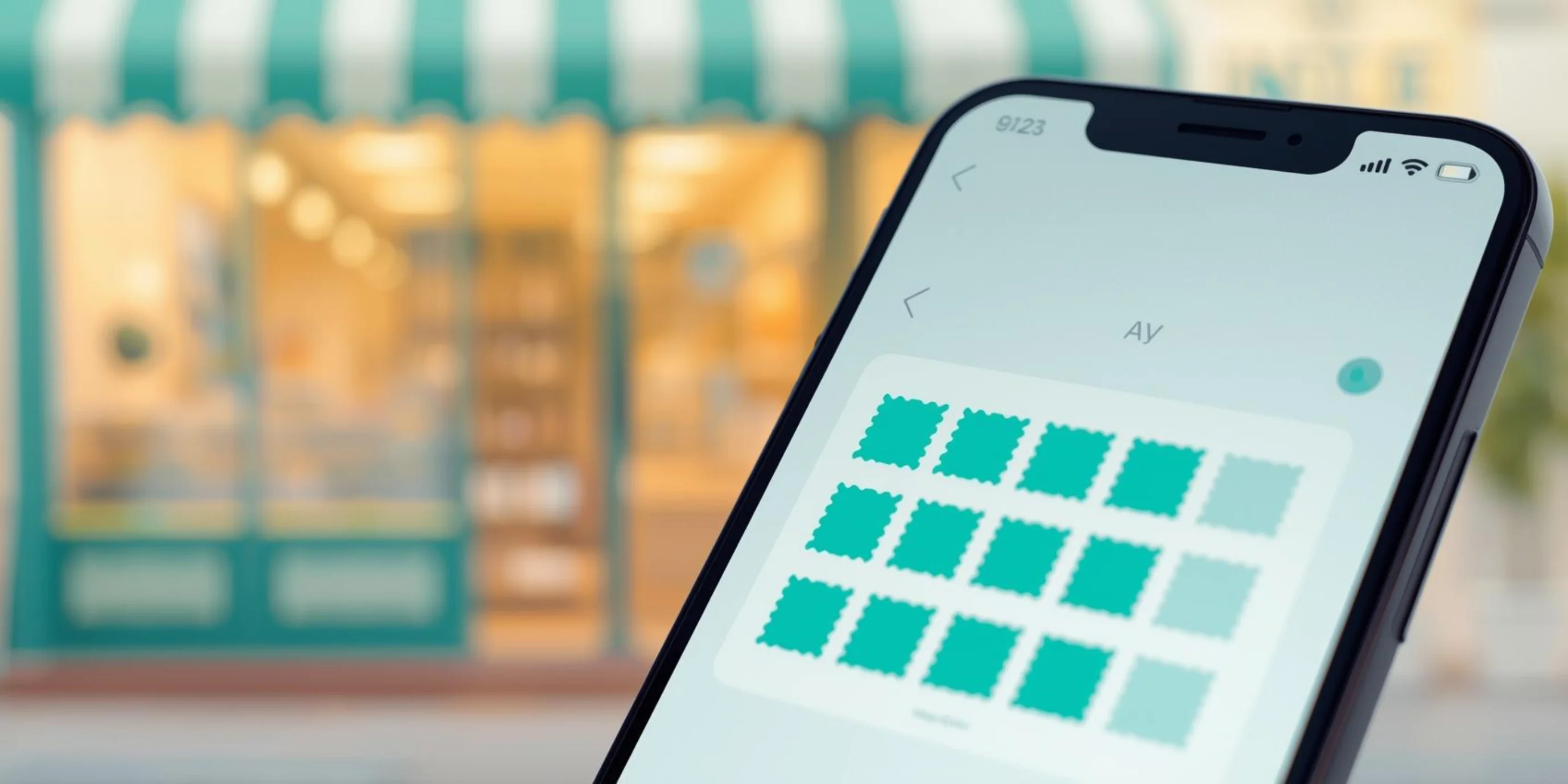
- The simplest loyalty structure (stamp cards: "buy 9, get the 10th free") is still the most effective for small businesses
- Digital loyalty cards outperform physical punch cards — they don't get lost, can't be faked, and let you track what's working
- You don't need expensive loyalty software. A free digital loyalty card with a QR code at your counter covers 90% of small business needs.
Why Loyalty Programs Work (Even Small Ones)
The math behind customer loyalty is hard to argue with:
- Repeat customers spend more per visit. Multiple studies across industries show existing customers spend 60-70% more per transaction than first-time buyers.
- Retention is cheaper than acquisition. Acquiring a new customer costs 5-7x more than keeping an existing one.
- A small increase in retention has an outsized impact. A 5% increase in customer retention can increase profits by 25-95%, according to research by Bain & Company.
But here's what most loyalty program content won't tell you: these stats come from large retailers and enterprise brands. Does a loyalty program work for a small café, a solo hairstylist, or a one-person tutoring business?
Yes — but only if you keep it simple.
The mistake most small businesses make is copying what big brands do. Starbucks has a points system with tiers, gamification, app integration, and personalized offers powered by a team of data scientists. You don't need that. You need something your customers can understand in 5 seconds.
Which Loyalty Structure Fits Your Business
There are four common structures. Pick the one that matches how your customers buy.
1. Stamp Cards ("Buy X, Get One Free")
How it works: Customer gets a stamp (digital or physical) with each purchase. After X stamps, they get a free item or service.
Best for: Businesses with frequent, similar transactions — cafés, bakeries, food trucks, juice bars, car washes, laundromats.
Why it works: It's instantly understandable. No math, no conversion rates, no "how many points is that worth?" The customer can see exactly how close they are to the reward.
Setting the threshold: 8-10 stamps is the sweet spot for most businesses. Fewer than 6 and the reward comes too quickly (costs you margin). More than 12 and customers lose motivation before completing it.
The psychology: Researchers at Columbia University found that people accelerate their purchasing as they get closer to the reward — the "goal gradient effect." A customer with 7 out of 10 stamps will visit more frequently than a customer with 2 out of 10.
2. Points-Based ("Earn Points Per Dollar")
How it works: Customer earns points based on spending. Points can be redeemed for discounts or free items.
Best for: Businesses with variable transaction sizes — salons, spas, retail stores, tutors, pet grooming.
Why it works: Rewards scale with spending. A customer who spends $200 earns proportionally more than one who spends $20, which feels fair.
Setting the conversion: Keep the math simple. "1 point per dollar, 100 points = $10 off" is clear. "3.7 points per dollar, 847 points = 15% on selected items" is a headache nobody wants.
3. Tiered ("Bronze / Silver / Gold")
How it works: Customers unlock better perks as they reach spending thresholds.
Best for: Businesses with high-value, less frequent purchases — professional services, training programs, premium retail.
Why it works: Status is a powerful motivator. People will spend more to maintain or reach the next tier.
The risk for small businesses: Tiers add complexity. If you have 30 regular customers, dividing them into bronze/silver/gold tiers can feel forced. This works best when you have hundreds of repeat customers.
4. Referral-Based ("Bring a Friend, Both Get Rewarded")
How it works: Customer refers someone new. Both the referrer and the new customer get a reward.
Best for: Service businesses that grow by word-of-mouth — personal trainers, tutors, photographers, consultants.
Why it works: It turns every customer into a salesperson. The reward makes them feel good about recommending you, not awkward.
Setting the reward: Make it valuable enough to motivate action. "10% off your next visit for you AND your friend" is stronger than "5% off for you."
Which One Should You Pick?
For most small businesses starting their first loyalty program, stamp cards are the answer. They're the simplest to set up, the easiest for customers to understand, and the most proven structure for frequent-purchase businesses.
If your transactions vary a lot in price (a $30 haircut vs a $150 color treatment), points-based is better because it scales with spending.
If you're a service business that grows mainly through referrals, start with a referral program and add stamps or points later.
Skip tiers unless you have a large customer base. The complexity isn't worth it for most small businesses.
Digital vs Physical Loyalty Cards
Physical punch cards have worked for decades. But they have real problems:
Physical cards get lost. Customers forget them at home, lose them in their bag, or wash them in the laundry. Every lost card is a customer who effectively starts over — and some just stop coming.
Physical cards can be faked. Anyone with a hole punch can give themselves free stamps. This doesn't happen often, but it's a risk.
Physical cards can't tell you anything. How many active loyalty customers do you have? How often are they visiting? Which reward threshold performs best? Physical cards are invisible to analysis.
Digital loyalty cards solve all three: They live on the customer's phone (never lost), stamps are verified by you (can't be faked), and every stamp is tracked (you can see patterns).
The tradeoff: digital cards require the customer to have a phone and scan a QR code or open a link. For almost every business in 2026, this is a non-issue.
Setting Up Your Loyalty Program
Here's how to go from zero to a working loyalty program in about 5 minutes:
1. Choose your structure. Stamp card (buy X, get one free) or points-based (earn per dollar). For your first program, stamp cards are almost always the right choice.
2. Set your reward. What does the customer get when they complete the card? A free item, a discount, an upgrade? The reward should be valuable enough to motivate repeat visits but not so generous it erases your margin.
3. Set the threshold. How many stamps/points to earn the reward? For stamp cards, 8-10 is standard. For points, choose a round number that's reachable in 4-6 visits.
4. Create your loyalty card. Pick a template that matches your brand. Add your business name, logo, reward description, and the number of stamps needed.
5. Set up your QR code. Print the QR code and display it at your counter, checkout, or reception area. When a customer makes a purchase, they scan the code (or you scan theirs) to log a stamp.
6. Launch it. Mention it to every customer at checkout. "We just started a loyalty program — buy 9, get the 10th free. Want to scan the QR code to start?" Most people say yes.
Create Your Free Loyalty Card
Digital stamp cards and loyalty programs. Free forever, no signup.
Making It Work: Practical Tips
Setting up the program is the easy part. Making it successful takes a few deliberate habits.
Promote It Consistently
The #1 reason loyalty programs fail isn't bad design — it's that customers don't know about it or forget about it.
- Mention it at every checkout. Train yourself (or your staff) to ask every customer if they want to scan their loyalty card. Every. Single. Time.
- Display the QR code prominently. Countertop sign, receipt footer, wall poster. The customer shouldn't have to ask about it.
- Add it to your receipts. If you use a receipt generator, include a note: "Did you scan your loyalty card today?"
- Post about it on social media. "3 stamps away from a free coffee? Come in today and get closer." This is free marketing.
Set the Right Threshold
Too easy → you give away too much margin. If every 3rd coffee is free, you're losing money.
Too hard → customers never complete the card and stop caring. If they need 20 purchases for a reward, motivation dies after purchase #5.
The sweet spot for most businesses: 8-12 purchases for a reward. This means a customer visiting weekly completes a card in 2-3 months — frequent enough to stay motivated, slow enough to protect your margins.
Give a Head Start
A powerful trick from behavioral research: give customers 2 stamps on their first card. A card with 2/10 stamps filled feels closer to completion than a card with 0/8 — even though both require 8 more purchases.
This is the "endowed progress effect." People are more motivated to complete something they've already started than to begin something from scratch. It costs you nothing but significantly increases completion rates.
Track and Adjust
After the first month, look at your data:
- How many customers are actively using the program?
- How many have completed a card and redeemed a reward?
- Are completion rates where you expected?
If very few people are completing cards, your threshold might be too high. If almost everyone completes quickly, you can afford to raise it slightly. The beauty of a digital program is that you can see these patterns and adjust.
Common Mistakes
Making redemption complicated. "Present this card on a weekday between 2-4pm, excluding holidays, for purchases over $15." Just... no. "10 stamps = 1 free [item]. Any time." Simple wins.
Forgetting about it after launch. The biggest drop-off in loyalty program engagement happens in week 3-4. That's when the initial excitement fades and consistent promotion becomes critical. If you stop mentioning it at checkout, customers stop scanning.
Setting the reward too low. "Buy 10, get 10% off your next purchase" is not motivating. The reward needs to feel worth the effort. A free item or a meaningful discount (25%+) drives completion. A token discount (5-10%) doesn't.
Not thanking people who redeem. When a customer completes their card and claims their reward, that's a moment of peak satisfaction. Acknowledge it. "Congrats on your free coffee — you've earned it!" turns a transaction into a relationship.
More small business guides
Practical guides for growing your business. No fluff.
No spam. Unsubscribe anytime.